Floors That Handle Real Workshop Use
Epoxy Floor Coatings in Monongahela for garages, shops, and industrial spaces exposed to heavy traffic and chemical spills
Select Painting & Services installs epoxy floor coatings across residential, commercial, and industrial properties where surfaces face daily wear from vehicles, equipment, and harsh materials. The system starts with mechanical grinding to remove contaminants and open the concrete pores, creating the surface profile necessary for the epoxy base coat to bond at a molecular level rather than simply sitting on top. Properties in Monongahela and surrounding Pennsylvania communities benefit from coatings that resist the salt, moisture, and temperature swings that cause untreated concrete to pit and crack over time.
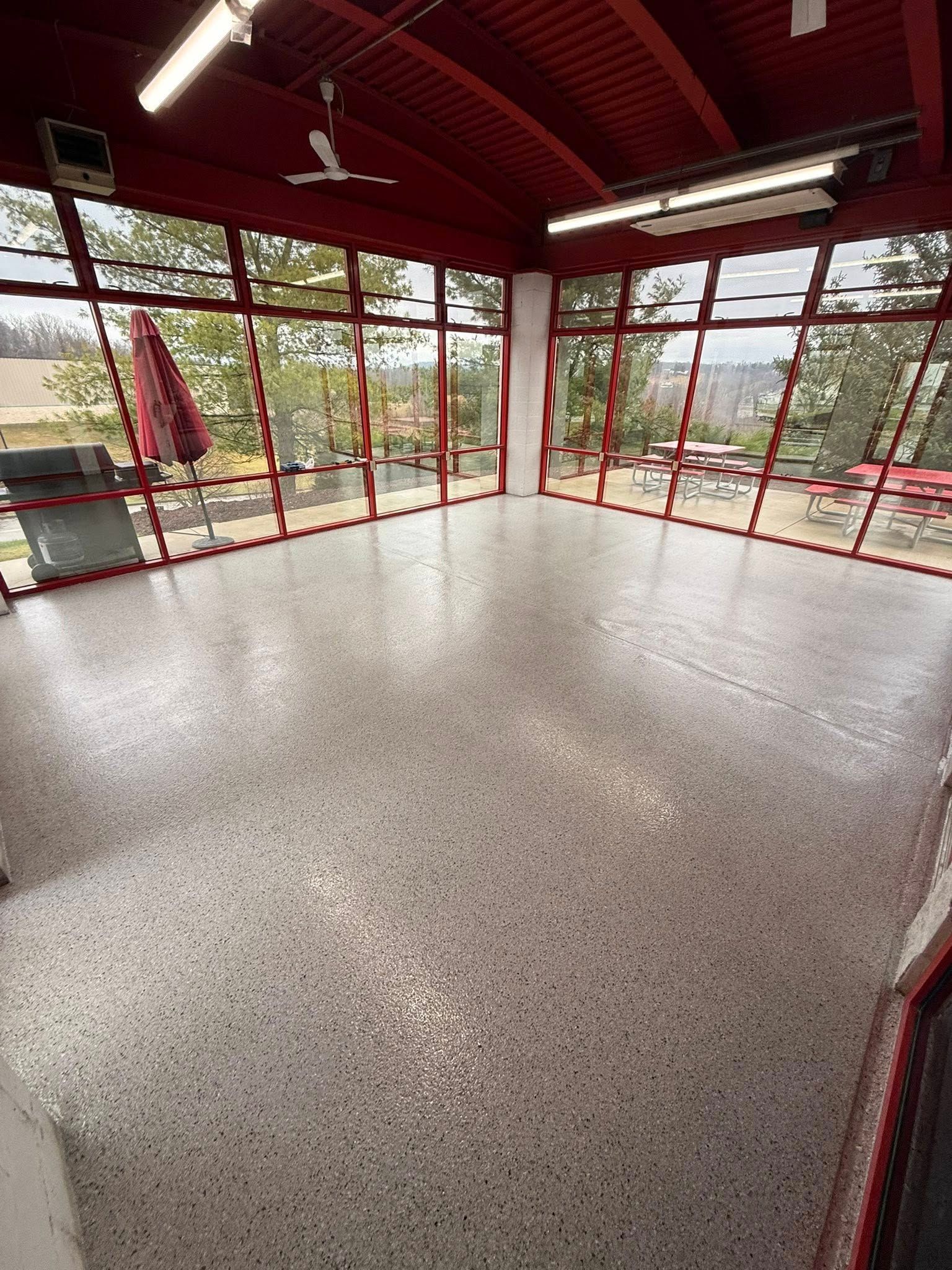
The installation process includes grinding the existing slab to remove oils, sealers, and surface laitance, applying a multi-layer epoxy base coat, and finishing with a polyaspartic clear coat that cures quickly and resists ultraviolet degradation. This combination addresses the most common garage and workshop problems: tire marks that won't scrub off, oil stains that soak into porous concrete, and surface dusting that coats everything stored on the floor.
Request a detailed estimate that includes surface evaluation and coating system recommendations based on your floor's current condition and use patterns.
What Proper Epoxy Application Requires
Surface preparation determines how long the coating lasts and whether it delaminates under load. The concrete is ground to remove the top layer of contaminated material and create an open pore structure, then vacuumed completely before the epoxy base coat is rolled and broadcast with decorative flakes or left smooth depending on the finish you select. The polyaspartic clear coat goes on after the base has cured, forming a protective layer that handles abrasion and chemical exposure without yellowing or hazing.
Once the system cures, the floor sheds liquids instead of absorbing them, tire marks wipe away with a damp cloth, and the surface no longer generates concrete dust that settles on vehicles and stored items. The coating remains intact under the weight of trucks, motorcycles, toolboxes, and shop equipment without cracking or peeling at the edges. Select Painting & Services customizes color and finish options to match the space, whether you need a high-gloss showroom appearance or a slip-resistant workshop surface.
The polyaspartic topcoat allows faster return to service compared to traditional epoxy-only systems, and the full build resists the specific chemicals common in Pennsylvania garages: road salt, battery acid, antifreeze, brake fluid, and the petroleum products that destroy untreated concrete. Proper installation includes edge preparation along walls and control joints to prevent coating failure at transition points where movement occurs.
What Property Owners Usually Ask
Homeowners and facility managers throughout the region ask similar questions before starting a coating project, particularly about preparation requirements and performance under local conditions.
How does grinding differ from acid etching for surface preparation?
Mechanical grinding removes surface contaminants and creates a consistent profile across the entire slab, while acid etching often leaves inconsistent results and requires neutralization before coating application.
What makes polyaspartic clear coats different from standard epoxy topcoats?
Polyaspartic coatings cure faster, resist ultraviolet light without yellowing, and provide superior abrasion resistance compared to epoxy alone, which extends the floor's appearance and durability in high-traffic garages and workshops.
How do epoxy coatings perform during Pennsylvania winters when salt and moisture track in daily?
The coating system creates a non-porous barrier that prevents salt and water from penetrating the concrete, and the polyaspartic topcoat resists the chemical breakdown that occurs when chloride-based deicers sit on unprotected surfaces.
When should existing coatings be removed before applying new epoxy?
Any coating that shows delamination, bubbling, or poor adhesion must be ground off completely, because new epoxy will only bond as well as the weakest layer beneath it.
What decorative options work best for residential garage floors?
Broadcast flake systems provide slip resistance and hide minor imperfections in the concrete, while solid color applications with clear topcoats create a high-gloss finish that highlights the floor's reflective properties.
Select Painting & Services handles surface evaluation and system design for properties throughout Monongahela, Washington, Canonsburg, Bethel Park, Pittsburgh, and Mt. Lebanon. Schedule a free estimate to review your floor's condition and discuss coating options that match how you use the space.