Protection Built for Equipment and Chemical Exposure
Industrial Coatings in Monongahela for warehouses, manufacturing facilities, and industrial spaces requiring heavy-duty surface protection
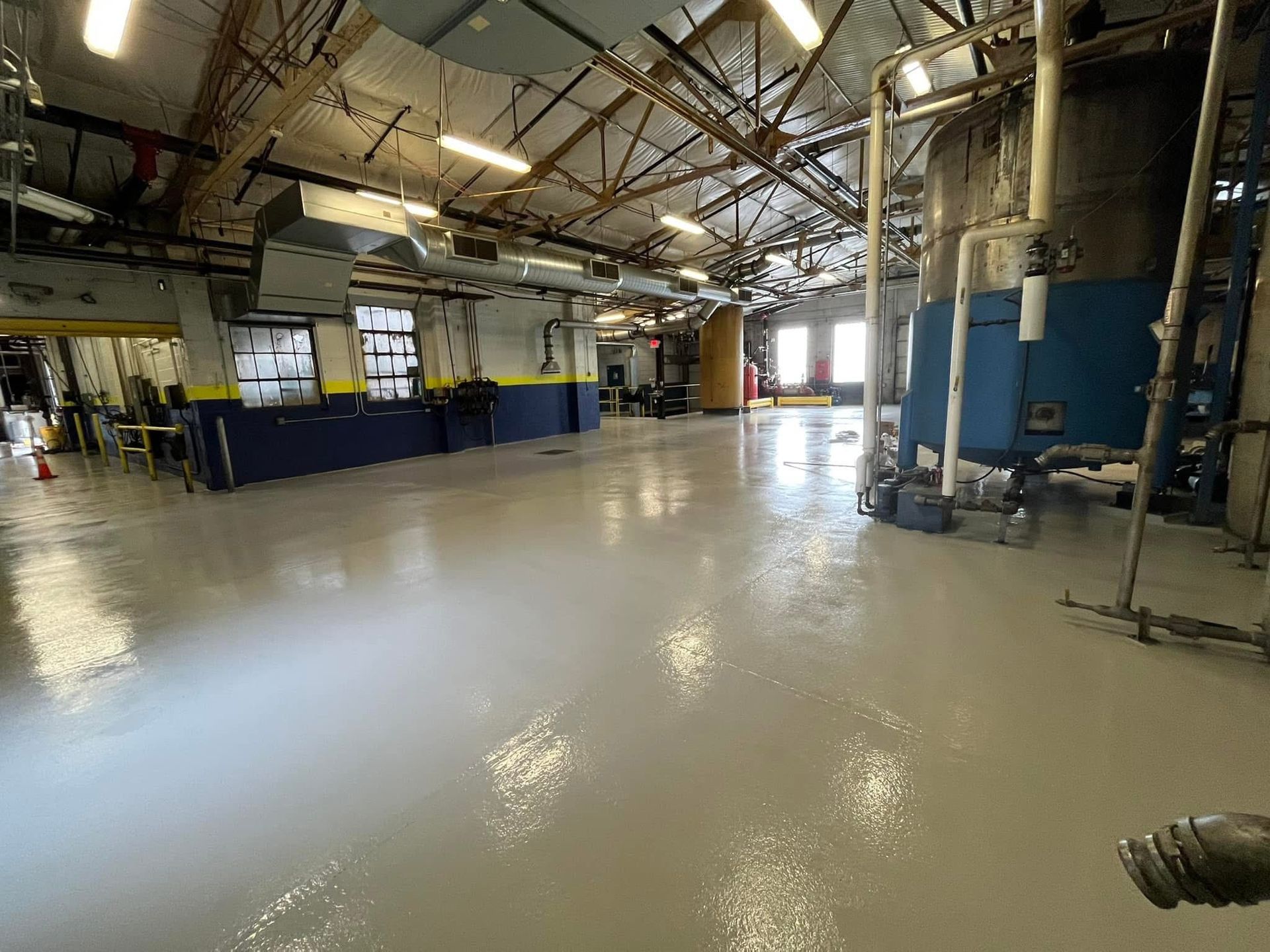
Manufacturing floors and warehouse surfaces face conditions that destroy standard coatings: forklifts dragging pallets, chemical spills, abrasive materials, and heavy equipment traffic that concentrates thousands of pounds on small contact points. Proper surface preparation becomes critical at this scale—sand blasting removes mill scale, old coatings, and contaminants that prevent new coatings from achieving the bond strength necessary to withstand industrial loads. Select Painting & Services applies coating systems designed for these environments, using materials and processes that address the specific failure patterns common in Pennsylvania industrial facilities where temperature swings, moisture, and heavy use combine to test every surface.
The coating process begins with surface preparation matched to the existing condition, whether that requires mechanical grinding, sand blasting, or chemical stripping to reach clean substrate. Multiple coating layers build thickness and impact resistance, and the final protective coat resists the specific chemicals, oils, and solvents present in your facility.
Request a facility assessment to identify high-wear areas and develop a coating specification that addresses your floor's specific traffic patterns and exposure conditions.
Why Industrial Environments Need Specialized Coating Systems
Standard garage coatings fail in industrial settings because they lack the build thickness and chemical resistance required for manufacturing and warehouse use. Industrial coating systems include aggressive surface preparation that creates deep anchor profiles, thick base coats that fill surface irregularities and build impact resistance, and topcoats formulated to resist specific chemicals rather than general household products. Sand blasting removes rust, old paint, and surface contamination on steel and concrete, creating the clean profile needed for maximum coating adhesion.
After installation, the coated surface withstands forklift traffic without abrading through to bare concrete, chemical spills wipe up before they penetrate and stain, and the floor stops generating dust that contaminates products and clogs equipment. High-traffic aisles maintain their coating integrity instead of wearing through to substrate within months, and loading dock areas resist the impact and abrasion from pallet jacks and heavy carts.
The company works with facility managers to schedule coating projects around production demands, completing surface preparation and application during shutdowns or working in sections to keep portions of the facility operational. Large-scale projects require coordination for material delivery, surface prep equipment, and ventilation during coating application, particularly in occupied facilities where odor and cure time affect operations.
Questions Before Starting Your Project
Facility managers and property owners evaluating industrial coating projects ask about preparation requirements, cure times, and performance expectations under demanding conditions.
What surface preparation methods work best for heavily contaminated industrial floors?
Sand blasting removes oil-soaked concrete, old failing coatings, and surface contaminants that grinding alone cannot address, creating the clean substrate necessary for coating adhesion in facilities where chemicals have penetrated deep into the concrete.
How do industrial coatings handle forklift traffic and pallet jacks?
Proper industrial systems include build thickness and hardness specifications that resist the point loads and abrasion from steel wheels and pallet edges, unlike thinner residential coatings that wear through quickly under concentrated loads.
Why do some industrial coatings fail at expansion joints and floor seams?
Coatings must accommodate the movement that occurs at control joints and slab edges, requiring flexible sealants at these locations rather than attempting to bridge gaps with rigid coating materials that crack under stress.
When should existing coatings be removed versus coated over?
Any coating showing delamination, chemical damage, or poor adhesion must be removed completely, because new coatings will fail at the same weak points regardless of the new material's quality or thickness.
How do coating systems protect concrete in manufacturing environments common throughout Monongahela industrial areas?
The coating seals concrete against chemical penetration and moisture absorption while providing abrasion resistance that extends floor life, reducing the frequency of concrete repairs and replacements in high-use facilities.
Select Painting & Services handles industrial coating projects for facilities requiring reliable surface protection and minimal operational disruption. Contact the company to discuss your facility's specific coating requirements and schedule a detailed project estimate.